

Fund Recipients and Research Projects
Yuliya Ten, M.A.
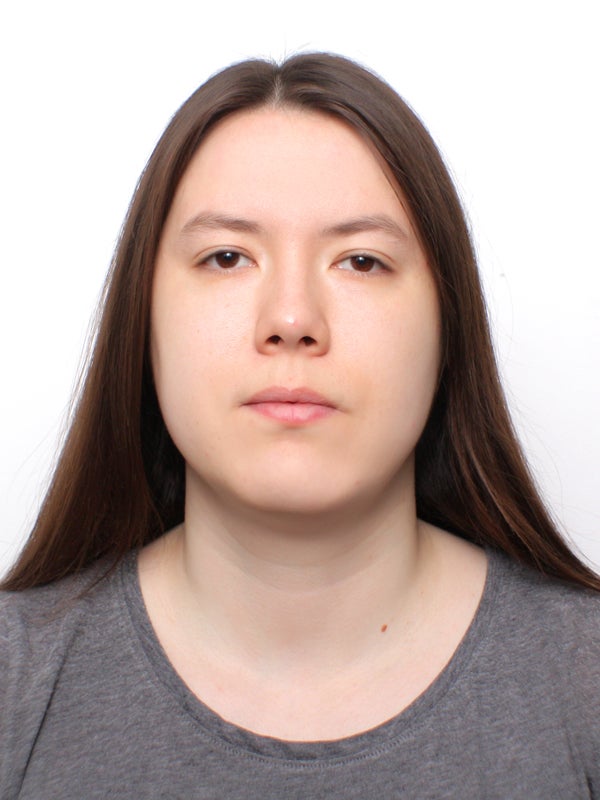
Yuliya Ten received the Jacques Rossi Memorial Fund for Gulag Research for her research on the emotional and sensory world of Gulag survivors in Soviet Kazakhstan. She focused on shifting the study of Soviet repressions from the state-centered perspective currently dominating historiography towards the lived experiences of survivors in the Gulag. For this, she explored how these people perceived and represented their reality through emotions, senses, and everyday interactions, attempting to move beyond depictions of them as passive victims or idealized heroes. She examined not only ego-documents such as memoirs and shorter autobiographic texts but also official reports produced by Soviet officials, which often reveal unexpectedly empathetic attempts to understand the repressed. Her archival work has concentrated on the collections of the Archive of the President of the Republic of Kazakhstan, the Central State Archive, and the National Archive in Astana. She also worked in the National Library of Kazakhstan and the National Academic Library to locate additional memoirs and regional compilations of testimonies. As a result of this research, she wrote a paper that she is currently revising and planning to present at conferences and submit for publication.
Yuliya Ten is a Ph.D. candidate at Georgetown University.
Zhanara Almazbekova, M.A.
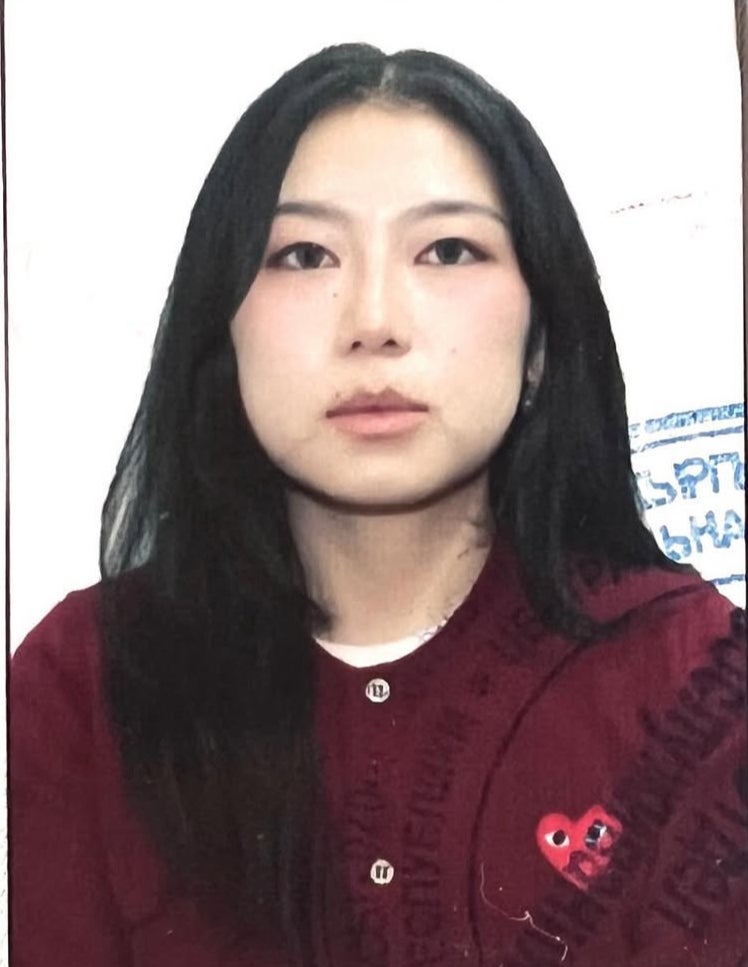
With the support of the Jacques Rossi Memorial Fund, Zhanara Almazbekova conducted archival research in Bishkek, to investigate Stalinist repressions in Soviet Kyrgyzstan from the late 1930s to early 1960s. Her project aimed to examine the life and death of Torokul Aitmatov – a prominent Kyrgyz politician purged in 1938 – to explore one local encounter with the Great Terror and its multigenerational effects. After his arrest, the Aitmatov family was branded “enemies of the state,” enduring social exclusion and hardship until his posthumous rehabilitation in 1958. Their story reflects the broader experiences of the Central Asian intelligentsia, who suffered under Soviet political purges alongside other targeted groups. During her fieldwork, Zhanara worked in the Central State Archives of the Kyrgyz Republic and the Political-Social Documentation State Archives. While unable to access detailed records of Aitmatov’s arrest and execution, she located documents on the “Group of Thirty,” a circle of Kyrgyz intellectuals and officials who resisted Russification and were swiftly punished through expulsion, exile, or execution over the same period of repression. These findings pushed her research in an unexpected direction, enriching my broader dissertation, which traces the evolution of the political landscape in Soviet Central Asia from 1917 to the 1950s. The Jacques Rossi Memorial Fund made this research possible, enabling access to critical archival materials and new perspectives on a neglected chapter of Soviet history. This support has been instrumental in the early stages of Zhanara’s doctoral work and will continue to inform her future research.
Zhanara Almazbekova is a Ph.D. candidate at Georgetown University.
Jonathan Sicotte, Ph.D.
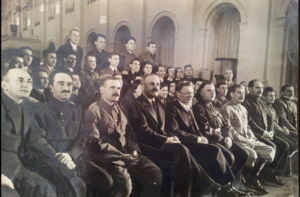
In the fall of 2014 and 2015, the Jacques Rossi Memorial Gulag Fellowship provided me with critical monetary support to facilitate research on the impact of state coercion in Azerbaijan and its connection to the Soviet Gulag system. For this project, I was able to gather vital archive material from the State Archive of the Russian Federation (GARF), the Russian State Archive of Socio-Political History (RGASPI), and the State Archive of the Republic of Azerbaijan (ARDA). The materials I uncovered highlighted the connections between mass detention under Mir Jafar Baghirov – then head of State Security and First Secretary of the Azerbaijani Soviet Socialist Republic (ASSR) – and the Azerbaijani oil industry. They also helped me more deeply address the profound social and economic implications of state repression in Azerbaijan both for the population of the Republic and the rest of the Soviet Union. The process began to develop in the late 1920s with the purge of remaining politicians connected to independent Azerbaijan, continued with the dekulakization campaign of 1930-1931 and culminated in the mass cleansing of the engineering and managerial staff of Azneft (the state oil trust in Azerbaijan). During the Great Purge itself, tens of thousands of citizens from across Azerbaijan were detained and exiled into the larger Gulag system.
With the critical support provided by the Fellowship, I endeavored to prove that the transfers of these individuals and families from prisons and temporary internment camps in Azerbaijan to special settlements and camps in Kazakhstan from 1930 to 1938 was a form of state violence responding in significant part to the perceived vulnerability of the economically critical oil industry in Baku. Across this period, Baku would be vital for both the Soviet’s foreign trade and domestic economic policy and Soviet security policy in Azerbaijan would continue to revolve around it.
Dr. Jonathan Sicotte is currently writing a monograph on the development of Baku and its oil industry based on his 2017 dissertation, “Baku: Oil, Violence and Identity.”
Paula Chan, Ph.D.
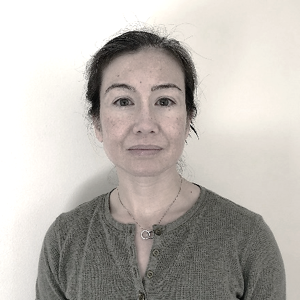
The Jacques Rossi Memorial Fund for Gulag Research funded my very first research in Russian archives early on during my time at Georgetown. I went to Moscow with an interest in knowledge transfer: how did Soviet investigations of Nazi concentration camps during World War II inform the Soviet approach to, and perception of, its own network of forced-labor camps? While overseas, I expanded the scope of my inquiry to encompass other elements of Soviet investigations of Nazi crimes, a shift I could not have made with confidence without examining the archival materials themselves on-site. Two years later, I have circled back for another close look at the Gulag, now that I have recognized just how many Jewish survivors of the Holocaust and Soviet collaborators with the Nazi regime were sent to work side by side in the Gulag during the final years of Stalin’s rule. Following the many interesting twists and turns dictated by the underlying source materials depends upon access to documents. In this respect in particular, I am grateful to the Rossi Fund for having supported the early stages of my research, allowing me to pursue unexpected connections between the Gulag and Soviet society at large.
Paula Chan received her Ph.D. in Russian and Eastern European History from Georgetown University in 2023 and is currently a Postdoctoral Research Fellow at All Souls College, University of Oxford (2023-2028). Her dissertation, “Eyes on the Ground: Soviet Investigations of the Nazi Occupation,” was awarded the Robert C. Tucker/Stephen F. Cohen Dissertation Prize (Association for Slavic, East European, and Eurasian Studies) and the Harold N. Glassman Dissertation Award in the Humanities (Georgetown University). Her most recent articles have appeared in the Journal of Slavic Military Studies and Slavic Review.
Simon Belokowsky, Ph.D.
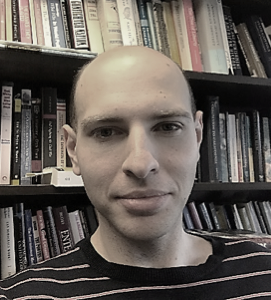
The Jacques Rossi Fund afforded me the opportunity to work at the State Archive of the Russian Federation [GARF] as well as the Moscow Archive of the Memorial Foundation. Influenced by scholars’ recent efforts to situate the Gulag within the broader context of the Soviet project, I wondered whether and how the cultural propaganda aimed at prisoners themselves was tailored to their particular context. These questions had been approached by other scholars for the 1920s and early 1930s, but less had (and has) been done on later periods covering the apex of the system’s extent. Ultimately, I found a lack of imagination in satirical propaganda aimed at prisoners, which deviated rather little from what was observed in other, more prosaic venues in the USSR. This encouraged me to think about prisoners’ own humor, which served an important purpose in helping inmates process the complicated social pressures of their perilous environment.
Regarding authorities’ posture toward the purpose of the Gulag system – a fraught question for historians – one of my more interesting finds was an instruction from central NKVD authorities in Moscow to camp administrators of political propaganda and education proclaiming that all prisoners should be permitted to publish work in the camp press regardless of the statute under which they were convicted. This meant that alongside common criminals, political prisoners sentenced for counterrevolutionary crimes could participate in the political education of their fellow inmates. To be sure, there was an element of exigency behind this proclamation – political prisoners tended to be the most literate segment of camp society. On the other hand, this implied that not only could all classes of offenders be rehabilitated into faithful citizens, but that they could also contribute positively to the rehabilitation of others. A more cynical interpretation would hold that higher strata of the NKVD bureaucracy understood that political prisoners were generally not the agents of treachery, which they were presented to be.
Simon Belokowsky earned his Ph.D. from Georgetown University in 2020 with the dissertation, “Youth is to Live in the City! Rural Out-Migration in the Black Earth Region under Khrushchev and Brezhnev.” His article “Laughing on the Inside: Humor as a Lens on Gulag Society” was published in the summer 2019 issue of the Journal of Social History.
Jooeun Kim, Ph.D.
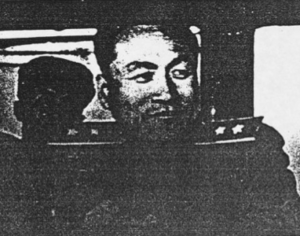
With the generous support of the Jacques Rossi Memorial fund for Gulag Research, I was able to conduct research on the North Korean Gulag and the ordeal of Soviet-Koreans. In 2017, I visited the Hoover Institute’s archive where I worked with documentation on the Soviet policy of internal isolation. In addition, I worked with materials housed in the Library of Congress. I read memoir materials and biographies of Soviet-Koreans, written in Korean. These materials were assembled in 1972 by a man called Ri Sangjo, a former DPRK ambassador to the Soviet Union. Ambassador Ri chose not return to Pyongyang after his tenure as an ambassador in Moscow and assembled the collection in an effort to counter the distorted and hagiographic history told by North Koreans who purged any Soviet-Koreans and sent to the Gulag.
While North Korean Gulag is well known for its brutality, the stories of Soviet-Korean who ended up in the system during its early development throughout the 1950s are virtually unknown, both in the United States and in South Korea. There are many heart-breaking stories, including one about a kind family man named Ko Hui-man, who was living in what was later the Soviet Far East during the Japanese colonial period and later trained to become the first ethnic Korean combat pilot in the Soviet Army. Immediately after completing his training, he volunteered to go fight in the “Internationalist Brigades” in Spain against the fascists from 1935 to 1937. He returned to the Soviet Union just in time for the first mass ethnic deportation under Stalin: the deportation of Koreans to Central Asia. Despite his service in the Internationalist Brigade, Ko was sent into internal exile in the Soviet Union for 8 years. Then, in 1945, he was summoned to Moscow to be part of a group of ethnic Koreans to return to his ethnic homeland (Korea) after its liberation from Japan to help build a socialist state. The internationalist spirit that inspired him to go to fight fascism in the skies over Spain and then to bring socialism to Korea sealed his fate, however, as it clashed with the growing nationalism of the local Korean leadership. Ko was purged and sent to the North Korean Gulag where he almost certainly perished. This is just one example among so many tragic and unjust stories, most of which we will never know.
Dr. Jooeun Kim is Stanton Nuclear Security Fellow at the Council on Foreign Relations.