

Worlds of Revolution: America250 as a Global Historical Event
Supported by the Georgetown University Office of the Vice President for Global Engagement, and coordinated between the GU Global Irish Studies Initiative and the GU Institute for Global History, “Worlds of Revolution” is one of Georgetown University’s signature contributions to the semiquincentennial of the American Revolution.
Reflecting on the American Revolution and its international legacies, the series will invite audiences to consider the concept of an “age of revolutions”, from the eighteenth century to the twentieth century. In this long era of revolts against monarchies and empires, rebellions against rulers and dynasties, rejections of longstanding ideas, and competing attempts to build new orders on the site of the old, some revolutions achieved their stated aims. Others did not. Yet all produced a much different world, one that “Worlds of Revolution” will seek to better understand with close looks at commonalities, differences, and connections between revolutionary experiences across Europe, Latin America, Africa, and Asia, in addition to North America.
All events take place at 5PM ET at the Georgetown University Mortara Center for International Studies, 3600 N Street NW, Washington, DC. Light refreshments will be served. Events are free but registration is required.
Wednesday, January 14, 2026
Speaker: Mia Bay, Paul Mellon Professor of American History (University of Cambridge)
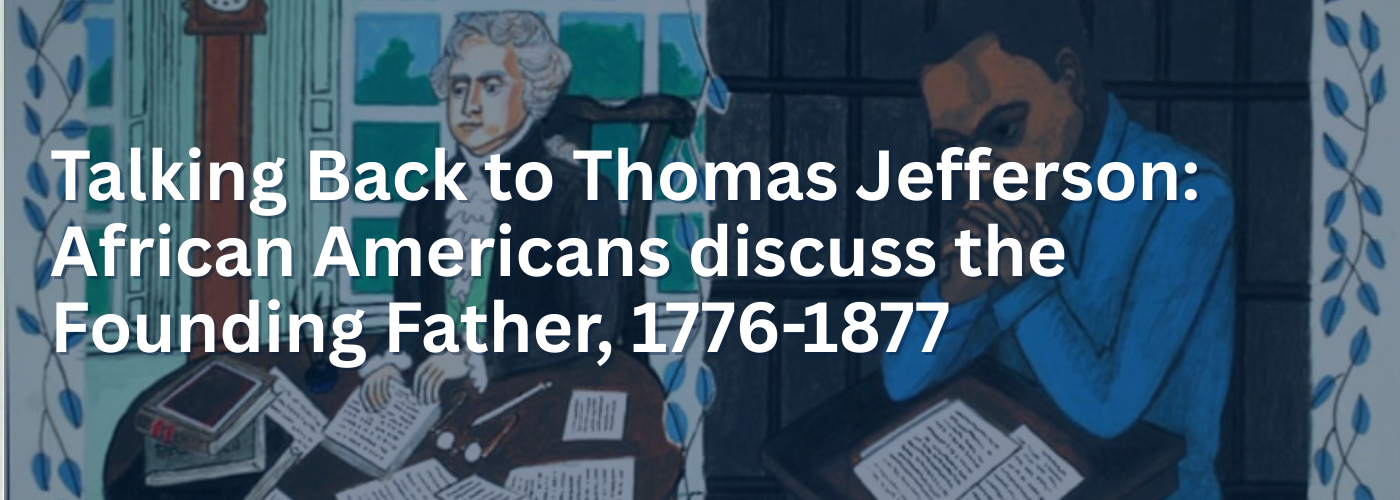
This paper is drawn from a study of African American ideas about Thomas Jefferson. It explores the connections between early black struggles for freedom and civil rights and African American claims on American nationalism and citizenship.
Mia Bay is the newly appointed Paul Mellon Professor of American History at the University of Cambridge. Prior to arriving at Cambridge, she taught at the University of Pennsylvania, where she was the Roy F. and Jeanette P. Nichols Professor of American History, and at Rutgers University, where she also directed the Rutgers Center for Race and Ethnicity. Her research interests include the history of ideas about race, the intellectual work of black women, the study of African American approaches to citizenship, and the history of race and transportation.
Wednesday, February 18, 2026
Speaker: Marlene Daut, Professor of French, Black Studies, and History (Yale University)
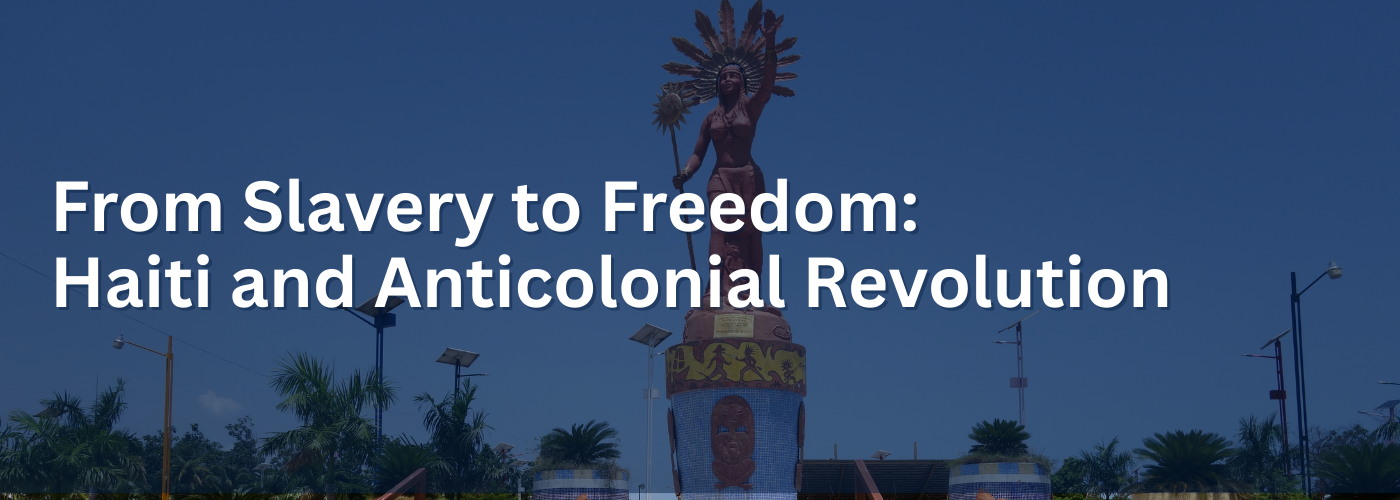
This talk reframes the story of colonialism, slavery, and revolution, showing Haiti at the vanguard of the transatlantic abolitionist movement, and in so doing, challenging the notion that Africans and Black Americans were mere passengers on a seemingly linear road from slavery to freedom. As underscored in my book Awakening the Ashes: An Intellectual History of the Haitian Revolution, Atlantic World leaders perpetuated slavery until Haiti’s revolutionaries redefined it as a “crime against humanity.” Understanding this trajectory necessitates delving into over four hundred years of history, from European colonization to the rise of slavery and plantations in the Americas, to the pivotal role of Haiti’s revolution in sparking the Age of Abolition. Haiti was the driving force for abolition, and its profound influence stretches beyond inspiration, as Haitians actively contributed to the destruction of slavery throughout the Americas.
Marlene Daut is an award-winning author, scholar, and professor specializing in Haitian history and culture. Her most recent book, The First and Last King of Haiti: The Rise and Fall of Henry Christophe (Knopf, 2025), a finalist for the Cundill History Prize, explores the fascinating life of Haiti’s only king while delving into the complex history of a 19th-century Caribbean monarchy. Her other books include Tropics of Haiti: Race and the Literary History of the Haitian Revolution in the Atlantic World (Liverpool UP, 2015); Baron de Vastey and the Origins of Black Atlantic Humanism (Palgrave, 2017); and Awakening the Ashes: An Intellectual History of the Haitian Revolution (UNC Press, 2023), co-winner of the Frederick Douglass Book Prize. Daut’s articles on Haitian history and culture have appeared in over a dozen magazines, newspapers, and journals. Daut graduated from Loyola Marymount University with a B.A. in English and French in 2002 and went on to teach in Rouen, France as an Assistante d’Anglais before enrolling at the University of Notre Dame, where she earned a Ph.D. in English in 2009. Since graduating, she has taught Haitian and French colonial history and culture at the University of Miami, the Claremont Graduate University, and the University of Virginia, where she also became and remains series editor of New World Studies at UVA Press. In July 2022, she was appointed as Professor of French and Black Studies at Yale University.
Wednesday, April 15, 2026
Speaker: David A. Bell, Sidney and Ruth Lapidus Professor (Princeton University)
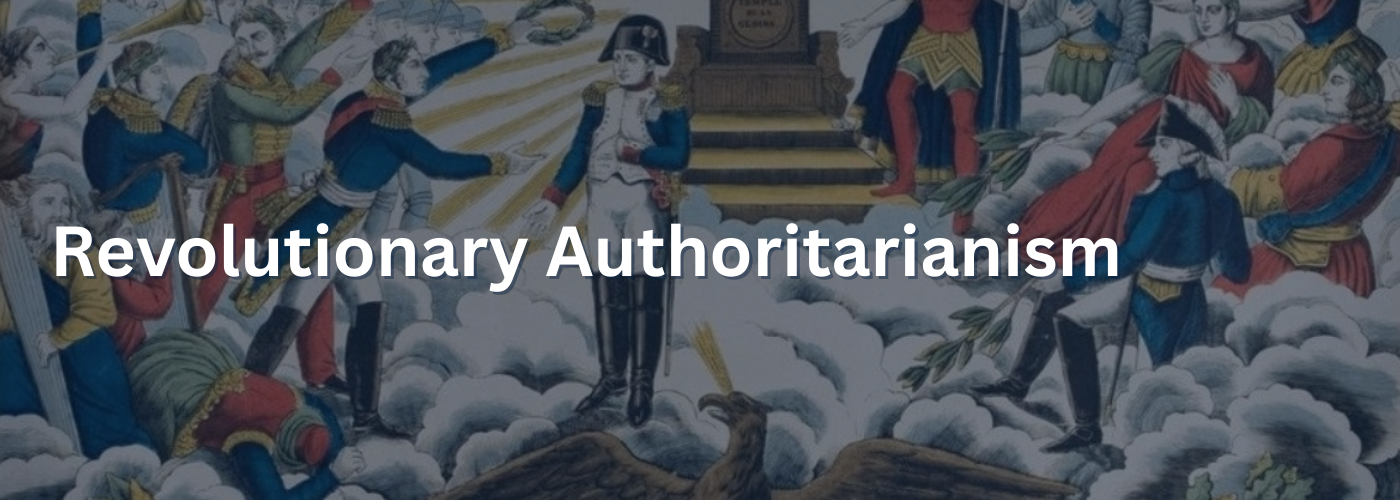
In all the major Western revolutionary movements of the late eighteenth and early nineteenth centuries, a military leader emerged as both the movement’s leader and symbol: George Washington, Napoleon Bonaparte, Toussaint Louverture, Simon Bolivar. The talk will explain why this was the case, and why the Age of Revolution was also, in most cases, an age of revolutionary authoritarianism.
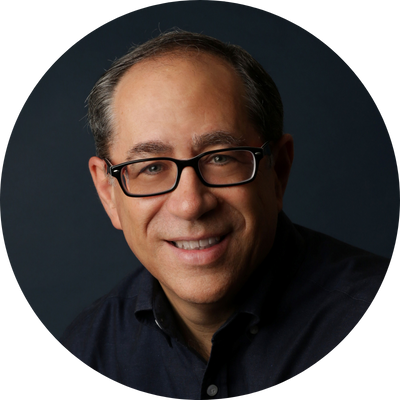
David A. Bell is the Sidney and Ruth Lapidus Professor in the Department of History at Princeton where he recently served as director of Princeton’s Shelby Cullom Davis Center for Historical Studies. Born in New York in 1961, he was educated at Harvard and the École Normale Supérieure in Paris before completing his doctorate at Princeton in 1991. Before returning to Princeton in 2010 he taught at Yale and Johns Hopkins, where he also served as Dean of Faculty. A specialist in the history of France, he is the author of seven books, including The Cult of the Nation in France: Inventing Nationalism, 1680-1800 (Harvard University Press, 2001), The First Total War: Napoleon’s Europe and the Birth of Warfare as We Know It (Houghton Mifflin, 2007), and most recently Men on Horseback: The Power of Charisma in the Age of Revolution (Farrar, Straus and Giroux, 2020). He has held fellowships from the Guggenheim Foundation, the Wilson Center, the American Council of Learned Societies and the Cullman Center at the New York Public Library. He has been elected to the American Academy of Arts and Science, and, as a Corresponding Fellow, to the British Academy. A former Contributing Editor of The New Republic, he is a regular contributor to The New York Review of Books and The Nation.
This Georgetown University Global Humanities Faculty Seminar Series is cohosted by:
